
North Hempstead Previous Residents by Research Era
One North Hempstead address can pass through distinct record systems. Nassau land records started with index books after the County's 1899 formation, later used property cards, and moved to an electronic database in July 1992. The current Official Records Search reports online image availability from February 22, 1994 forward, while older documents are added periodically. That means a searchable index, an available image, and a certified copy can belong to different eras and access routes.
| Source | Years it covers | Where held | What it can show |
|---|---|---|---|
| Nassau Clerk land index | Electronic database since about July 1992; certification line can reach 1992 | Official Records Search and Mineola counter | Grantor, grantee, instrument, date, legal description. |
| Land document images | February 22, 1994 to present, with earlier additions | Official Records Search | Instrument image, book or page, and recording detail. |
| Historic index books | 1840-1934 books among the repository browse routes | Historic Nassau Clerk repository and office | Direct and reverse references, deeds, plats, and older leads. |
| PWPL telephone directories | 1924-1959 digitized Long Island range; local runs through 1956 | Port Washington Public Library | Dated name, address, telephone, or business clues. |
| Port News and maps | Port News 1903-1996; historical maps about 1745-1991 | PWPL collections | Announcements, address context, place-name and street continuity. |
| Sanborn and census evidence | Map runs vary by place; census releases follow the 72-year rule | Library of Congress and archival sources | Building context and a dated household check. |
For North Hempstead previous residents, treat a gap as a reason to change custodians, not proof that no earlier household existed. The County Clerk counter, archive retrieval, library reference service, and scoped record request are all part of the trail.
Start North Hempstead Previous Residents Searches With the Current SBL
The first durable key is Nassau's Section-Block-Lot, or SBL. Search the Nassau Land Records Viewer by address or SBL and retain the parcel address, Town or village, school label, parcel class, deed reference, and any lot grouping. The roll owner and the recorded grantee are different dated signals, so neither should be called a present occupant without separate support. If the free result does not show a needed field, the Assessment office's property-record card route is the proper fallback.
The LRV sample parcel detail illustrates a privacy-aware research card. Its Plandome example carries Town North Hempstead, the Manhasset-6 school label, SBL 3-009-223, lot grouping 223,234, a one-family class, and deed reference 14446/0073.
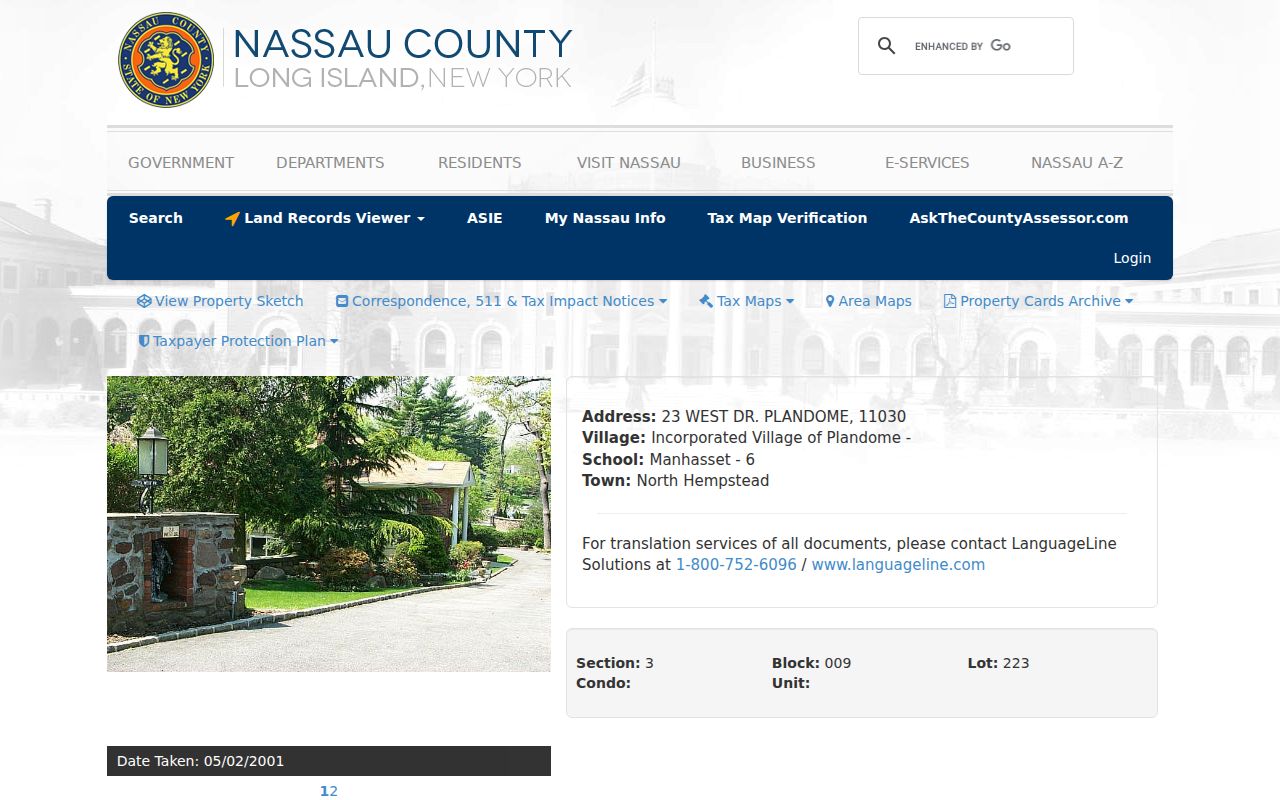
That combination shows why the SBL and legal reference should travel with the street address when the earlier record uses a different village or postal label.
Key distinction. A situs address identifies the parcel, while an owner mailing address may be elsewhere and can be outdated or unavailable in the free viewer.
Trace North Hempstead Previous Residents Through the Nassau Deed Chain
The County Clerk's Official Records Search is the main recorded-title route. Search the Deeds/Mortgages registry by current grantee or document reference, then record the grantor, grantee, recording date, book, page or document number, and legal description. Search the earlier grantor as an earlier grantee and repeat. Match the SBL, lot grouping, subdivision or map reference each time so that a similar street address is not mistaken for the same parcel.
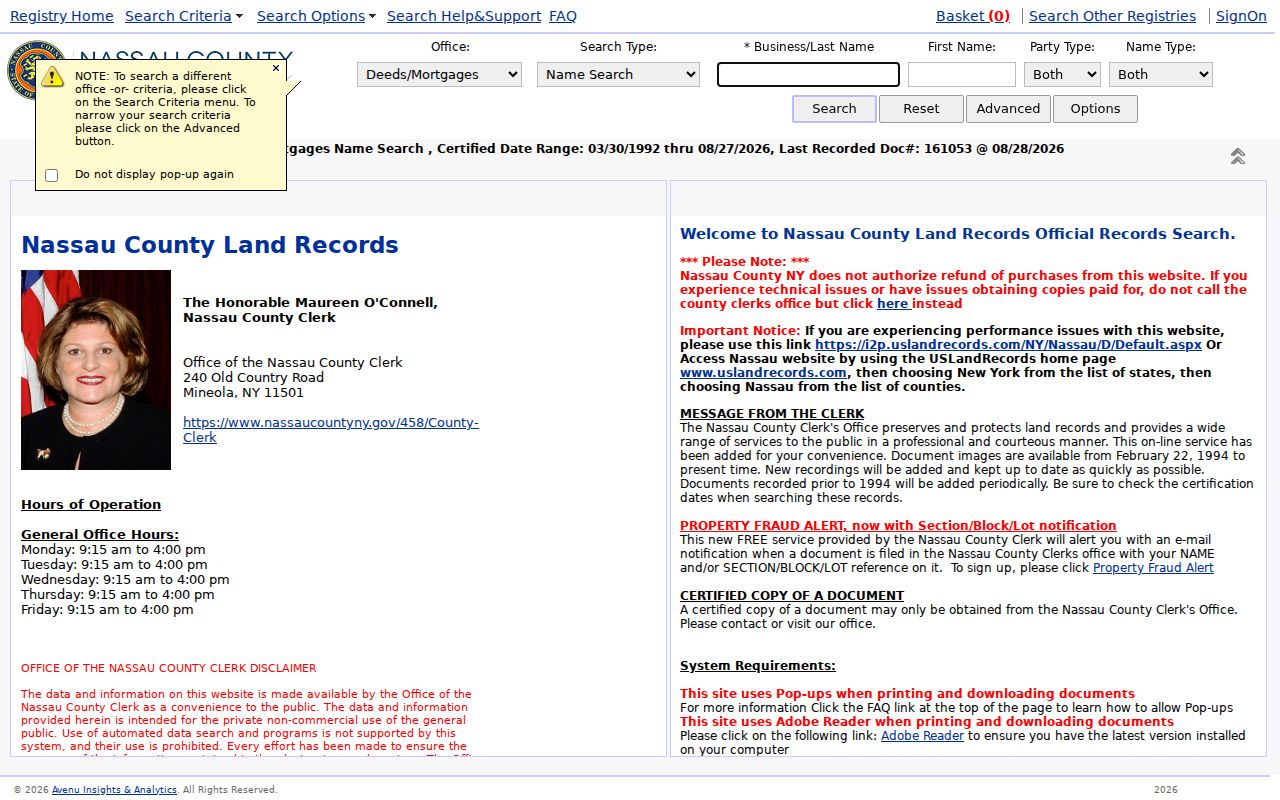
The index is free, downloaded images are listed at $0.65 per page, and result printing at $1.50 per page. Certified copies come only from the Nassau County Clerk, so an image download is not the same as an office-issued copy.
- Find the current parcel in LRV and write down its SBL and deed or liber-page reference.
- Search the Clerk's Deeds/Mortgages registry by grantee, name, document, book, section, reference, or recorded date.
- Read the instrument before moving backward, noting the grantor, grantee, date, legal description, and recorded identifier.
- Search the prior grantor as a grantee, then reconcile the SBL and legal description at every link.
- Move to historic books, the Mineola counter, or a request route when the online image or index has a gap.
Bridge the North Hempstead Image Gap With Historic Books
The historic Nassau Clerk repository is essential when a previous-residents trail reaches beyond the stronger online-image period. Its controls include document name or book number, record type, text search, year-from and year-to fields, and a page-search option. Browse routes include Official Records, Deed Records, Marriage Licenses, 1840-1934 Index Books, Direct Index Books, Reverse Index Books, and Plat Books. OCR can fail on handwriting or poor images, and not every document is searchable.
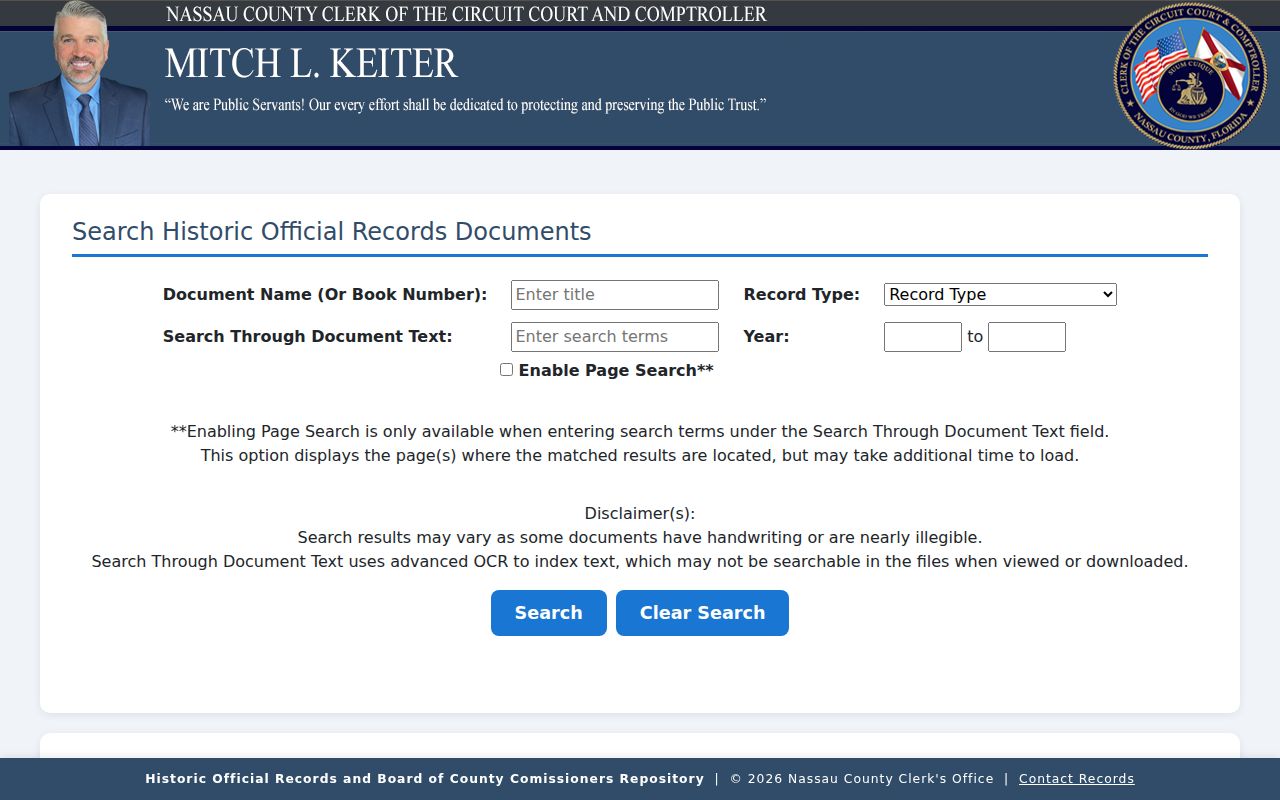
A failed text search is therefore a reason to browse by book, year, or reference and to ask the Clerk for archival retrieval, not a reason to invent an address match. The County Clerk accepts in-person, mail or delivery, lobby drop-box, and e-recording channels for the relevant record work; use the office for certified copies and older document retrieval.
The Land Records Division is part of the Nassau County Clerk at 240 Old Country Road, Mineola NY 11501, telephone 516-571-2664, generally Monday through Friday from 9:00 a.m. to 4:30 p.m. Before contacting the office, preserve the book or document reference, record type, party names, approximate date, SBL, and the specific image or copy needed. A precise request is more useful than an open-ended search for every prior name connected with a street. It also lets staff distinguish an archived document retrieval from a broad research inquiry.
When a historical entry uses an old road form, test the legal description, mapped lot, cross street, and community name. Research did not locate an official Town-wide street-renumbering schedule, so a modern number should not be treated as timeless.
Pair North Hempstead Past Residents With Directory and Census Dates
Deeds explain title, but past residents may appear first in a dated directory. Port Washington Public Library holds Long Island directories from 1924-1937, Nassau directories from 1925-1947, and Port Washington directories from 1931-1958. Its digitized materials add Long Island telephone directories from 1924-1959, Port News from 1903-1996, yearbooks, photographs, and oral histories. Some volumes have residential, business, or reverse material, but each run must be checked before assuming its format.
The directory collections themselves are described in the North Hempstead Directory Book. For one address, pair the closest directory issue with the deed's recording date, then consult an available federal census release for a household and relationship check. The 1940 and earlier census releases are available under the 72-year rule, and the 1950 census became public in 2022. A missing listing can reflect unlisted service, a changed local label, a gap in holdings, or a move.
PWPL reference staff can help scope a request to a surname, street, community, and year. Their telephone-directory reference contact is 516-883-4400 ext. 1400 or reference@pwpl.org. Ask whether a volume is digitized, fragile, microfilm, or available for in-person reference.
Date a North Hempstead Address With Maps and Property Files
Maps and property-file material can clarify the interval between a title transfer and a directory listing. The Nassau LRV map offers Aerial 2013, Nassau County 1926 and 1950 layers, historic NYS map layers, flood context, and measuring tools. The GIS parcel layer provides parcel identifiers, address, roll year, and geometry, but it does not establish household membership. Use its maps to compare a legal description or lot pattern with an older street form.
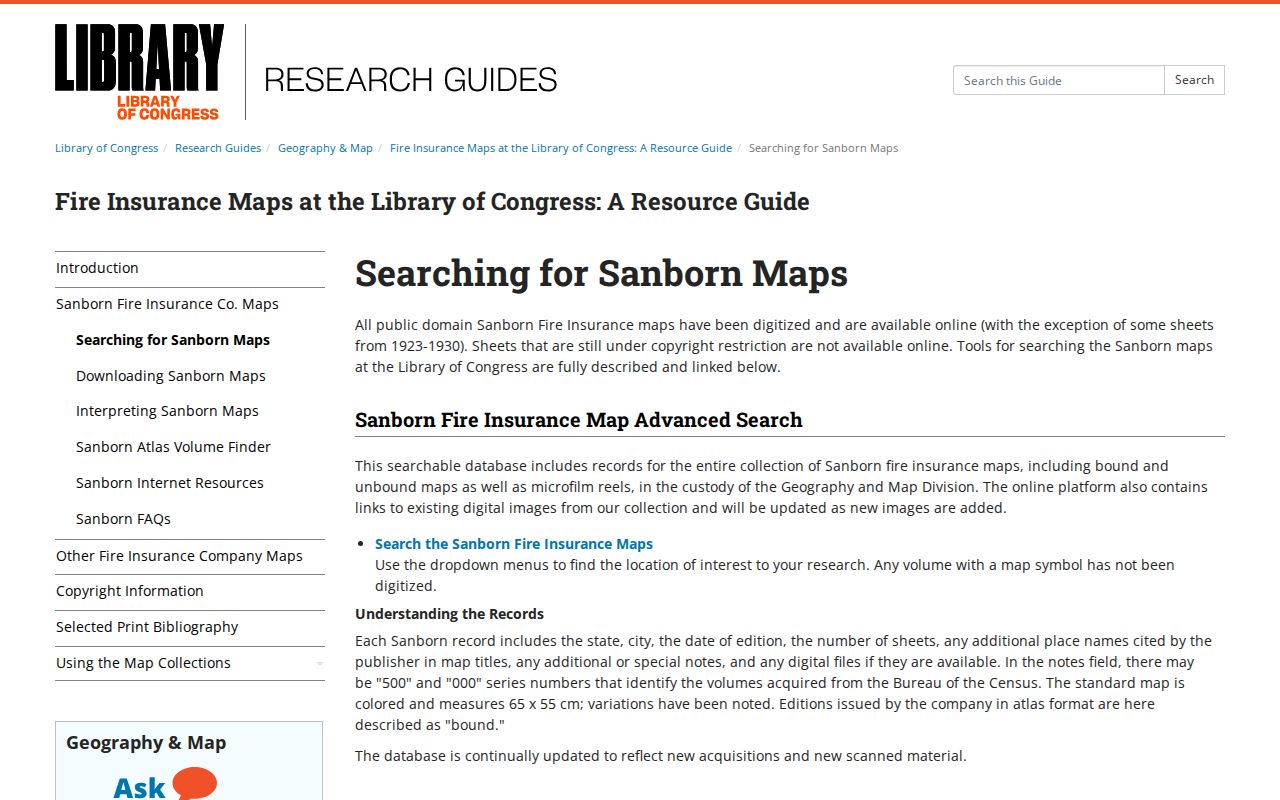
The Library of Congress Sanborn map research guide explains how to search by state, city, date, and sheet. Research notes reported runs for Port Washington in 1909, 1919, 1925, and 1931, and for Great Neck in 1909, 1919, and 1926, but did not confirm exact item IDs or sheet coverage for every address.
For unincorporated Town areas, building records can add applications, permits or certificates, inspection reports, notices, and orders. Submit a Town FOIL building-property-file request with the exact address or SBL, time span, permit type, and document requested. Incorporated villages may keep their own building records, and an applicant or permit holder is not necessarily the person who lived there.
Close a North Hempstead Previous Residents Trail With People Records
When a household leaves the address record, Port News, an obituary, a cemetery, or probate may identify a later family connection. PWPL's Port News collection covers 1903-1996; if an item is not digitized, ask reference staff about microfilm or clipping files. The research did not confirm a separate named obituary index, so cite the publication date and family relationship rather than claiming an index result.
Nassau Surrogate's Court is the proper court route for probate, wills, estates, administration, adoption, and guardianship material. A decedent's estate may connect an executor, heir, property, and later deed, but court procedures and access limits apply. For earlier North Hempstead and Cow Neck family context, Monfort Old Dutch Cemetery has graves dated 1737-1892, and PWPL's Wysong papers contain local landowner material from 1694-1938. These sources can anchor chronology without proving a modern address.
North Hempstead Previous Residents Terms and Privacy Limits
Use the record language precisely. That makes it easier to describe what a North Hempstead previous-residents result supports and where the trail must stop.
- Grantor / grantee
- The parties named in a recorded transfer. They identify the instrument, not every person at the address.
- Chain of title
- The sequence of instruments that connects one recorded ownership interest to an earlier one.
- Legal description
- The deed's parcel wording, often tied to SBL, map, lot, or metes-and-bounds language.
- Direct and reverse index
- Historic finding tools arranged from name to record or, in reverse material, by the index scheme used for the book.
Use records for family history, estate questions, and property research. Do not use them to watch, harass, or harm anyone. Address-confidentiality and confidential-voter programs can correctly limit a search, while sealed vital and court files remain subject to their custodians' rules.